01
Impact
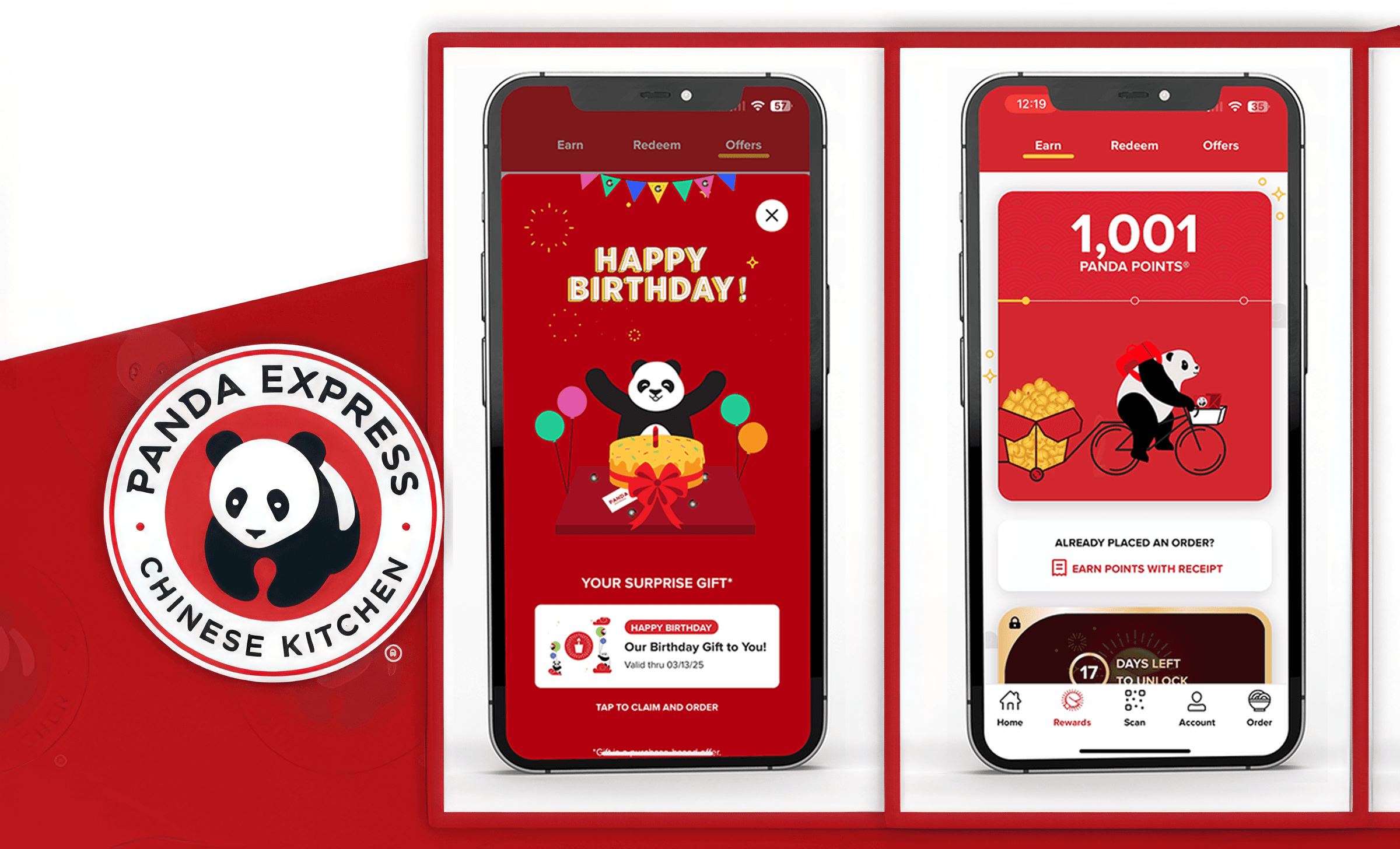
My contributions to the Panda Express app helped support the broader digital transformation that has grown Panda Rewards to more than 16 million members and driven over $1 billion in sales. These enhancements also contributed to Panda Express being recognized by Ipsos as the top-performing brand in digital ordering and app benefits. Together, these improvements help deliver a seamless, engaging experience that keeps guests returning.
02
What did I learn?
My internship was full of practical insights and meaningful lessons that shaped the way I approach product design. I learned how to operate within an agile workflow, iterating closely with PMs and engineers and understanding how fast-paced collaboration can transform an initial concept into a scalable experience. I also learned the importance of proactively setting up weekly design reviews—both with internal teams and external partners—to ensure alignment, gather early feasibility input, and avoid designers working in isolation from engineering. Additionally, I learned how to design accessible alternatives that preserve the core intent of the experience, balancing inclusivity with the spirit of the original experience.
Throughout the project, I grew more confident presenting my work to stakeholders, articulating design decisions, gathering feedback, and setting clear expectations so the team could move forward with clarity. I also developed a stronger ability to qualitatively assess prototypes, provide constructive guidance to engineers, and collaborate toward solutions that balanced craft with technical constraints. Finally, I gained hands-on experience building and maintaining a large design system, ensuring consistency and adaptability across a rapidly evolving product ecosystem.